


Choosing a wellness retreat for your parents requires a little more thought than booking a regular holiday.
For senior citizens, comfort, safety, accessibility and the quality of support available at the property can be just as important as the treatments or wellness activities themselves.
A good retreat should help your parents feel relaxed, cared for and comfortable throughout their stay.
Here are some of the most important things to consider before making a booking.
1. Check Whether the Retreat Is Suitable for Seniors
Not every wellness retreat is designed with older guests in mind.
Before booking, find out whether the property regularly hosts senior citizens and whether its programmes can be adjusted according to age, mobility and individual comfort.
A senior-friendly retreat should ideally offer a slower pace and avoid putting unnecessary physical pressure on guests.
Activities such as yoga, walking, hot spring bathing or wellness therapies should be adaptable rather than fixed for everyone.
2. Look at the Type of Wellness Programme Offered
It is important to understand exactly what is included in the programme.
Some retreats focus mainly on relaxation, while others may offer Ayurveda, naturopathy, yoga, meditation, hot spring bathing, massage or lifestyle-based wellness routines.
Ask for a clear daily schedule before booking.
This will help you understand whether your parents will have enough time to rest between activities.
A good wellness programme should feel balanced—not like a packed sightseeing itinerary.
3. Ask About Medical and Health Considerations
Senior citizens are more likely to have existing health conditions or be taking regular medication.
Before choosing a retreat, ask how the team handles guests with conditions such as:
- High or low blood pressure
- Diabetes
- Heart-related concerns
- Joint or mobility difficulties
- Previous surgeries
- Balance problems
- Dietary restrictions
The retreat should never promise to “cure” serious medical conditions.
Instead, it should clearly explain what it can and cannot provide and encourage guests to continue following their doctor’s advice and prescribed medication.
If your parents have significant medical concerns, it is sensible to discuss the planned wellness activities with their healthcare professional before travelling.
4. Accessibility Is Extremely Important
A beautiful property may not be suitable if your parents have difficulty walking.
Before booking, ask practical questions about accessibility.
For example:
Are there too many stairs?
Is there a lift?
How far is the room from the dining or therapy areas?
Are pathways steep?
Are handrails available?
Are bathrooms senior-friendly?
Is assistance available when entering or leaving bathing areas?
Small details can make a major difference to an older guest’s comfort.
If one or both parents use a walking stick, walker or wheelchair, accessibility should be discussed clearly before making the reservation.
5. Check the Accommodation Carefully
Senior travellers usually benefit from comfortable, easily accessible rooms.
Look for accommodation with:
- Comfortable beds
- Attached bathrooms
- Non-slip flooring where possible
- Easy access to common areas
- Adequate heating or cooling
- Good ventilation
- Hot water
- Clean surroundings
It is also worth asking whether ground-floor rooms are available if your parents prefer to avoid stairs.
Do not choose accommodation based only on photographs. Ask questions about practical comfort as well.
6. Food Should Be Simple and Adaptable
Food is an important part of any wellness stay, particularly for older guests.
Some seniors may need low-salt meals, lighter food, diabetic-friendly options or meals adapted to digestive sensitivities.
Ask whether the retreat can accommodate individual dietary requirements.
Meals should not become restrictive simply because the property markets itself as a wellness destination.
Your parents should receive food that is appropriate, nourishing and comfortable for them.
7. Look for Personal Attention
Senior citizens may occasionally need additional assistance.
A good retreat should have staff members who are approachable and available when required.
This becomes particularly important if your parents are travelling without you.
Ask whether someone will be available to:
- Explain the daily schedule
- Guide them between activities
- Assist with luggage
- Help with mobility if necessary
- Respond if they feel unwell
- Arrange local medical assistance if required
Personal attention can give both parents and family members greater confidence.
8. Understand the Safety of Hot Spring or Water-Based Activities
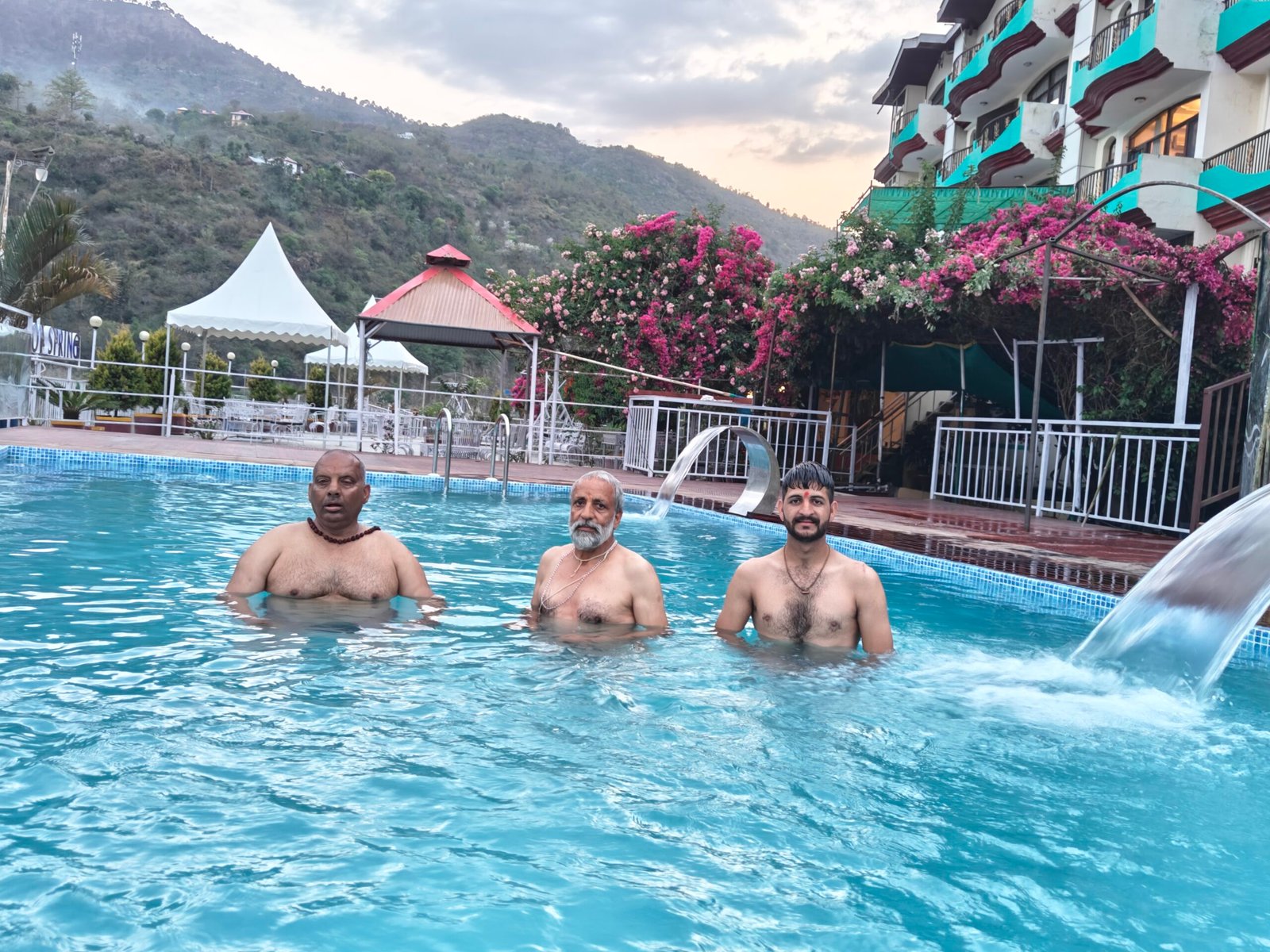
If the retreat includes hot spring bathing, hydrotherapy or warm-water activities, ask how these experiences are managed for seniors.
Very hot water or long bathing sessions may not be appropriate for everyone.
The retreat should encourage comfortable temperatures, sensible bathing duration, hydration and safe entry and exit from the pool.
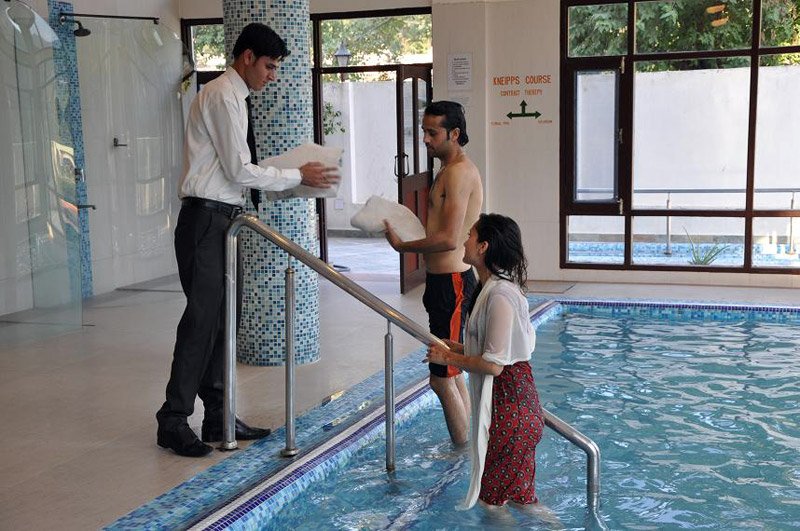
Handrails, non-slip surfaces and nearby assistance are particularly valuable for older guests.
Parents with heart conditions, blood pressure concerns or other medical issues should receive appropriate medical advice before participating in very warm-water activities.
9. Consider the Location and Travel Time
The journey to the retreat is just as important as the retreat itself.
A destination that requires many hours of difficult travel may leave older guests exhausted before the programme even begins.
Check:
- Distance from the nearest airport or railway station
- Road conditions
- Transfer arrangements
- Duration of the journey
- Availability of comfortable vehicles
- Distance to nearby medical facilities
If the property is in a mountain destination, ask about road accessibility and weather conditions during the planned travel period.
Choosing the right season can make the journey considerably more comfortable.
10. Check Whether There Is Enough Rest Time
One common mistake is assuming that a wellness retreat needs to be filled with activities from morning until evening.
For senior guests, rest should be part of the programme.
There should be enough time between yoga, therapies, meals and other activities to relax.
Parents should also feel comfortable skipping an activity if they are tired.
A retreat should support wellbeing—not make guests feel pressured to complete every session.
11. Ask About Emergency Support
Hopefully it will never be needed, but families should always know what happens if a parent becomes unwell.
Ask the retreat:
Where is the nearest hospital or clinic?
Can transportation be arranged quickly?
Are staff available during the night?
Is basic first-aid support available?
Who should the family contact in an emergency?
Clear answers to these questions are much more important than attractive marketing claims.
12. Look for Transparency Before Booking
A reliable wellness retreat should clearly explain what you are paying for.
Before confirming the stay, ask for information about:
- Accommodation
- Meals
- Wellness activities
- Therapies
- Transfers
- Taxes
- Additional charges
- Cancellation policy
You should also understand whether certain treatments are optional or included in the package.
Clear communication before arrival usually leads to a much smoother experience.
13. Speak to the Retreat Before Making a Decision
For parents, it can be helpful to speak directly with the retreat team rather than completing an online booking without any conversation.
Explain your parents’ age, mobility level, food preferences and any relevant health considerations.
Pay attention to how the team responds.
Do they ask sensible questions?
Do they explain limitations clearly?
Do they seem willing to adapt the programme?
The quality of this initial conversation can tell you a lot about the level of care your parents are likely to receive during their stay.
14. Avoid Retreats Making Unrealistic Health Claims
Be cautious if a wellness retreat promises guaranteed cures for serious medical conditions.
Wellness programmes can support relaxation, healthy routines, movement and general wellbeing, but they should not replace appropriate medical treatment.
A responsible retreat should be comfortable saying when a particular activity may not be suitable.
That transparency is a positive sign.
Conclusion
When choosing a wellness retreat for your parents, the best option is not necessarily the most luxurious or the one offering the largest number of therapies.
The right retreat is one where your parents can feel safe, comfortable, respected and properly supported.
Look carefully at accessibility, accommodation, staff support, food, programme intensity, medical considerations and travel arrangements.
Most importantly, choose a retreat that treats senior wellness as an individual experience rather than following the same programme for every guest.
A thoughtfully selected wellness retreat can give your parents valuable time to rest, enjoy gentle activities, spend time in a peaceful environment and focus on their overall wellbeing.